Dear Hearts,
Welcome back to our journey.
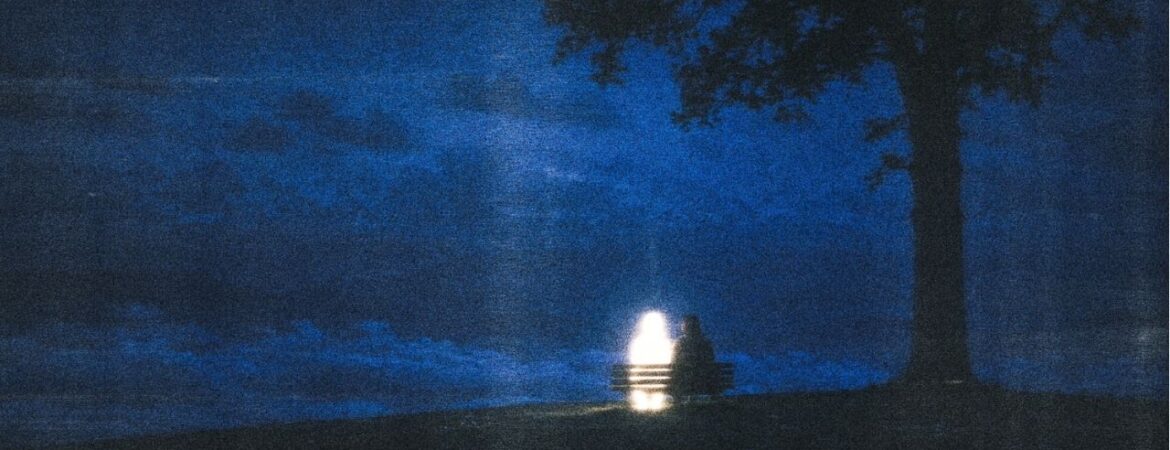
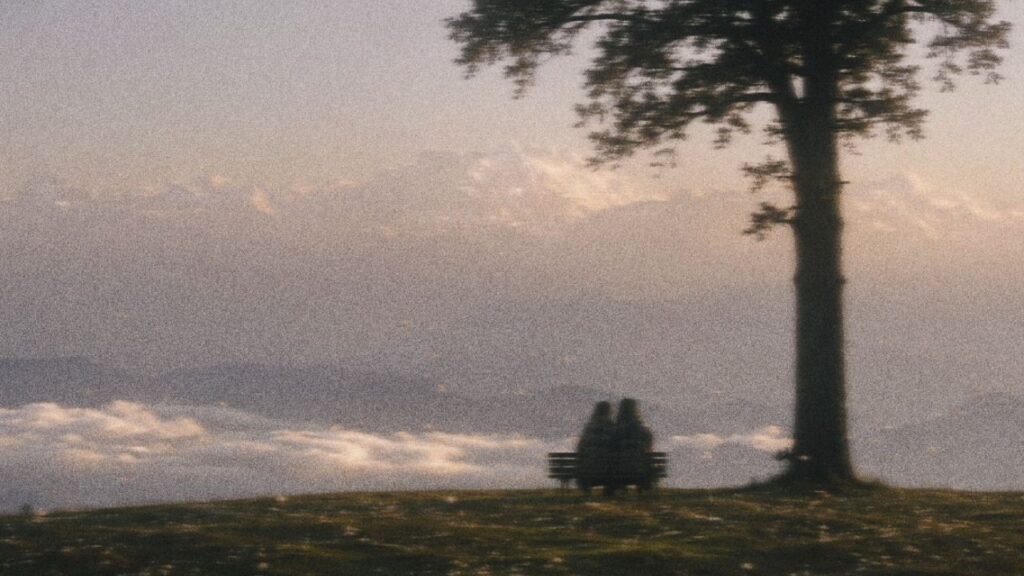
Today, I picture us sitting side by side on a bench that lies at the edge of my garden, overlooking endless green pastures and trees of jasmine. I offer you a blanket, and you politely decline at first before saying, “Yes, I think I will need one.” I smile knowingly as I run back towards the darling lodge. In the mere minutes that I am gone, the sunlight from yonder hills and the falling jasmine leave you overwhelmed with gratitude for this moment. Just as your mind begins to wander towards the end, I return with two cups of warm tea; one with fresh milk for you and the other with oat milk for me, along with your blanket. As I sit beside you, we both take a deep breath, taking in the sight before us, unified in our gratitude.
This, dearest heart, is what I want today’s conversation to feel like. May it warm you, may it touch you, and may it encourage you to recalibrate, as my own recent experiences have encouraged me to recalibrate.
Some people in this life have experienced tremendous loss and grief: the loss of a child, the loss of a spouse, the loss of a parent. Some among us have not had the gift of that loss arriving at the end of a life fully lived. There is indeed a tremendous amount of pain, loss and grief that lives within the everyday people we pass on the street or know firsthand. Some visibly carry this pain years later, while others have equipped themselves with the tools needed to move forward despite facing similarly devastating experiences. Today’s conversation is about how we can collectively strive to become the latter.
Firstly, I would like to acknowledge that there are some losses that stay with you forever. Anyone who has experienced the loss of a child will tell you that much. For others, it is the loss of a great love, a parent, a sibling or a beloved friend. Our conversation today isn’t about pretending we’re perfect. It is about acknowledging that we are human, and that to be human is to experience a glittering prism of emotions contained within one body.
Over the past few weeks, I have heard stories of people known to me and people known to others, and I have recognised that, in the instances involving people I knew, my energy became clouded. My sense of self weighed down. It is a feeling that renders you almost incapacitated, as though river stones were affixed to your ankles before an unseen force pushed you into a misty bog. These feelings are natural, but for some of us they can linger for an alarmingly long time. I am not here to tell you that there is a time limit to grief, only that when we are able to gently shift our understanding and perspective of death, regardless of its manner, we are better able to claw our way back to the surface of ourselves; out through the marsh and into the light.
Growing up in Sri Lanka, the teachings of Buddhism have always contextualised death as a journey, highlighting the impermanence of our human state. Within these teachings, it is believed that we experience many cycles of life after death, shaped by the karma we accumulate throughout our lives. Yet our personal beliefs are always tested most profoundly when we are faced with the death of those closest to us. In those moments, even the most eloquent philosophies seem unable to overcome the pain we feel within our souls.
Still, the principles remain the same. Life is a journey, and death its sister. We, and those around us, are simply embarking upon the next step of that journey. Within that understanding there is grace. However varied our beliefs may be, there is comfort in recognising an invisible interconnectedness to our human experience that extends beyond what we can see.
Similarly, I believe that every occurrence, no matter how small or seemingly insignificant, has a reason. Pain and trauma can blind us to that truth, preventing us from ever entertaining another perspective. Yet reaching a place where you rise from bed, take a warm shower, choose an outfit with a little colour, make yourself a cup of coffee or tea, and call an old friend, that is where I want you to arrive. We begin that journey by acknowledging not only the beauty and privilege of the lives we live, but also the beauty found in the time we shared with those we loved.
The gift of memory exists for this very purpose: so that we, too, can look back at the beauty contained within the moments we shared with those who have departed and still feel the warmth of their presence. We do not live inside these memories, nor do we allow them to become a crutch that slowly destroys our own lives. Rather, we carry them with us as a way of honouring those we loved so dearly.
I believe that understanding the transitional nature of our human experience is one of the greatest comforts we can hold when confronted with death. I have come to believe that it helps shape our ability to move forward after loss. Great grief has moulded mothers, fathers, spouses and friends into advocates who have changed the world and broken cycles of generational trauma. Great pain is a testament to the infinite capacity we possess as human beings, and history reminds us that the most beautiful things can emerge from ruin.
Just as a barren field begins to blossom after a raging storm, so too can the human spirit. We do not invite death to our door, yet inevitably it comes for us all; some sooner, some later, some through cataclysmic occurrences and others more quietly. When death comes for us all, perhaps the question is no longer, Why? Rather, it becomes, How shall I live in honour of those I have loved?
Do I live unapologetically? Do I reclaim a long-lost passion? Do I show up for my spouse in ways I could not before?
The questions are endless, and asking them is what slowly leads us through the numbing haze of grief and back into the light.
Always remember, dear hearts, that death is simply the next chapter in this journey we call life. It reminds us to be present, to be grateful, to strive for joy, and to live lives worthy of the memories we will one day leave behind.
To every heart carrying grief today, whether fresh or familiar, I want you to know this: you are capable of overcoming it, too. Because if all life is energy, then perhaps the energy of those we love never truly leaves us. Perhaps it simply changes form, remaining with us quietly until the time comes for us, too, to continue our own journey.
And perhaps one day, long after this conversation has ended, we’ll find ourselves back on that little bench overlooking the green pastures. The tea will have grown cold, the jasmine will still be falling, and for a little while longer, we will simply sit together in grateful silence.
After all, we are only passing through.
love always,
Avastavé by Dmitri Ruwan
Listen to the audio narration of this article here.